

Are Americans Rejecting Extremes, or Are We Just Angry at Both Parties?
Time to Choose Pragmatism Over Polarization
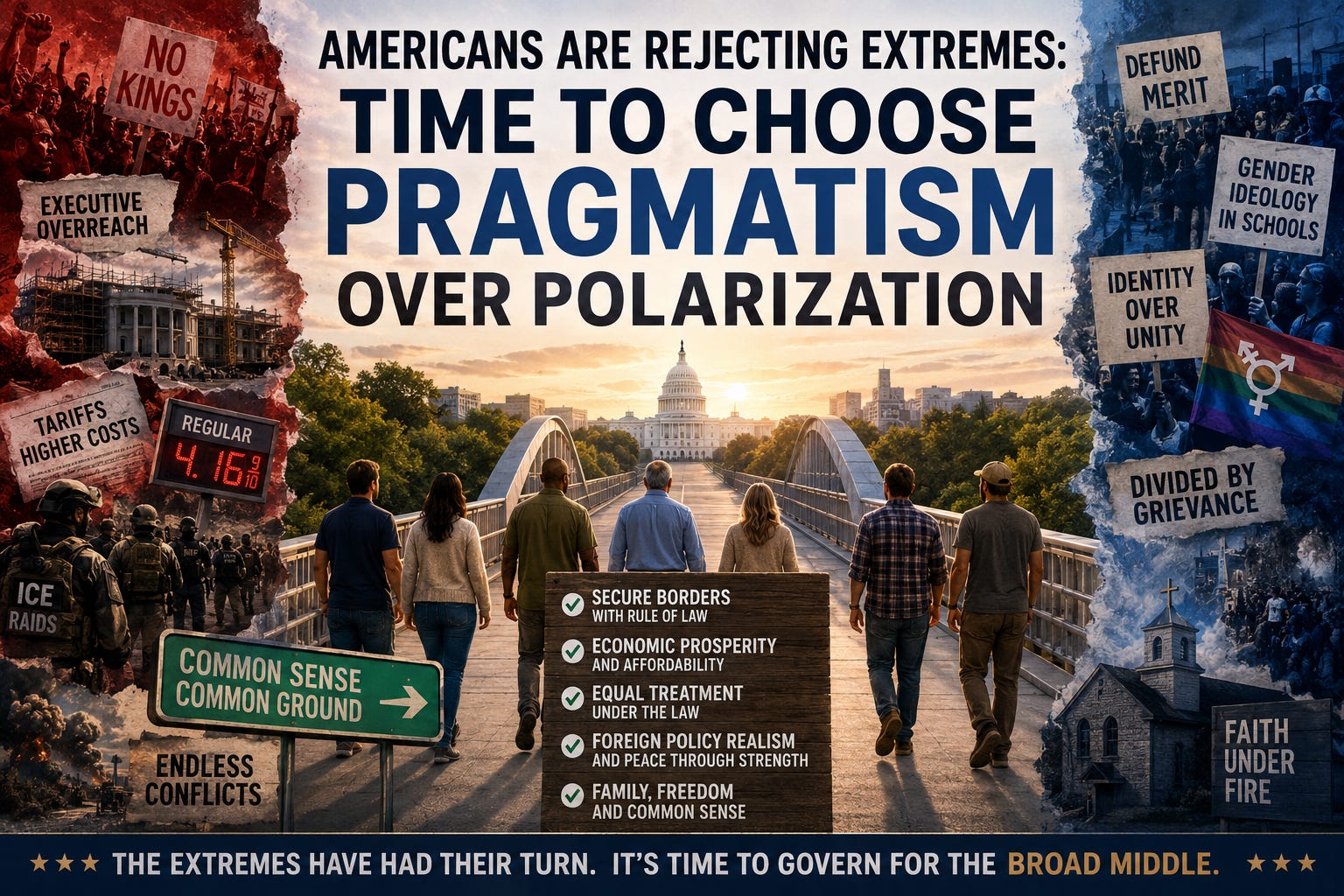
The American electorate is exhausted. Recent elections and polling paint a picture not of a nation marching decisively left or right, but of voters lurching away from perceived overreach wherever it appears. The 2024 Trump victory reflected frustration with Biden-era policies on borders, inflation, and cultural issues. Yet by mid-2026, with a hot war with Iran disrupting global energy markets, persistent inflation, and tariff-related economic friction, generic ballot polls show Democrats leading by 5–7 points or more. Trump’s approval hovers in the low-to-mid 40s in many surveys. Neither party owns the public’s trust.
This isn’t ideological realignment. It’s a thermostatic backlash: voters punish whoever seems to be driving the car off the cliff.
What Has Really Upset People About Trump and Republicans
While economic pain from the Iran conflict and tariffs has disillusioned many former supporters, deeper concerns fuel broader discontent. The war—escalating from strikes into disruptions of the Strait of Hormuz—spiked oil prices that pushed inflation above 4%, with national gas prices climbing toward $4.16 or higher in many areas. Inflation has raised costs for consumers and businesses.
Beyond economics, critics point to signs of expanding executive power and personal aggrandizement. Trump has been deeply involved in rebuilding parts of the White House, including a major new East Wing ballroom project funded privately but criticized for its scale and his personal input on design. Reports of putting his name prominently on buildings and initiatives, alongside continued allegations of fraud from past dealings and the shadow of January 6th events, amplify fears. Adding fuel to the fire, the Supreme Court has issued numerous emergency rulings favoring the administration’s assertions of executive authority, including on removals of officials and policy implementations.
Aggressive ICE raids and mass deportation operations, sometimes involving paramilitary-style tactics and reports of state violence or collateral incidents affecting citizens, have intensified debates over enforcement versus overreach. Today, June 14, 2026—coinciding with President Trump’s 80th birthday—features “No Kings” events, watch parties, and a major concert in New York City protesting perceived authoritarian tendencies, with local actions across the country.
These elements have validated some on the left’s longstanding fears of rising right-wing authoritarianism, eroding support even among some 2024 backers without fully rehabilitating Democrats in voters’ eyes.
The Alienation of the Left
Yet skepticism toward Democrats runs deep and cultural. Large segments—especially working-class voters, men, Whites, and Christians—view core Democratic-aligned institutions and rhetoric as hostile. DEI initiatives have faced growing pushback for alleged anti-White and anti-male discrimination.
Critics see the party embracing extremes on:
Immigration: Perceptions of prior lax enforcement and open-border policies that strained resources and is motivated more by political considerations than by what’s best for Americans.
Gender and culture: Aggressive promotion of DEI programs and transgender policies in sports, schools, and in rhetoric many see as anti-American, anti-white, anti-male, and dismissive of biological reality—and hence discriminatory, unfair and unequal.
Identity politics: Overemphasis on race and grievance that leaves the majority feeling demonized and publically shamed with little recognition of America’s progress on race and lacking nuance and insight into the larger problems, such as the rise of authoritarianism.
Polling and 2024 voting shifts (Hispanics, young men, non-college voters) reflect this alienation. Many reject what they experience as anti-Christian, anti-family, or anti-majoritarian messaging.
The Moderate Majority’s Opportunity
Self-identified ideology remains center-right leaning: more conservatives than liberals, with a huge independent/moderate bloc. Record independents signal rejection of both poles. Voters want competent governance prioritizing:
Secure borders with rule of law, not chaos or unchecked force.
Economic policies delivering growth and affordability, avoiding unnecessary wars and disruptive tariffs.
Equal treatment under the law—not identity favoritism or demonization of Americans, white people, men, Christians, or traditional values.
Foreign policy realism and cultural sanity: Acknowledging America’s progress on race, protecting democracy and free speech, avoiding unnecessary and costly wars, and recognizing biological realities, like male disposability in wars and the hazardous roles men fulfill while also supporting gender equality and diversity.
A Call for Course Correction
Both parties have fed extremism. Republicans risk fiscal recklessness, confrontational entanglements, and executive overreach that echoes the very “authoritarianism” they criticize elsewhere. Democrats risk cultural radicalism, institutional capture, and divisive identity politics that alienate the majority.
The public is signaling, through ballots, polls, and today’s protests, a desire to move away from the edges. This doesn’t require false equivalence. It requires evidence-based realism: merit, secure borders with humanity, energy independence, family policies supporting men and women as partners, and unifying rhetoric.
The 2026 midterms offer a chance. Americans aren’t becoming more left-wing; they’re tiring of dysfunction from all sides. The side that delivers practical moderation—security, prosperity, fairness without favoritism or excess—will prevail. The extremes have had their turn. It’s time to govern for the broad middle.